 Contact
 Help
Help






$353 Trillion and Counting: The Global Debt Crisis No One Can Stop

 BullionStar
 0 Comments



A new report from the Institute of International Finance states that global debt continues to rise, hitting a new record of nearly $353 trillion by the end of March. This is an increase of $5 trillion in just one month, and surpasses February’s previous high of $348 trillion.
Concerningly, the report also revealed a global debt/GDP ratio of 305%, meaning the world collectively owes just over three times its economic output. While the report classed the ratio of 305% as ‘stable’, it paints a grim picture of the health of the world’s economy, and is a clear warning of the unsustainable path we’re walking.
US Treasuries fall out of favour
The IIF also claims that investors are beginning to move away from US Treasuries (bonds) as fears grow over the ability of the US government to continue financing this growing debt. America’s debt/GDP ratio as of 2025 is 130.6%, having risen sharply since 2020 in a trajectory the government has so far failed to reverse. Expectations are that the Trump administration will continue to borrow, pushing this ratio higher. The administration’s approach to fiscal policy has already drawn attention domestically, with a government shutdown last year lasting 43 days.
This matters beyond America’s borders. US Treasuries have long functioned as the bedrock of the global financial system, the asset that investors flee to in times of uncertainty, and the benchmark against which virtually all other debt is priced. When confidence in Treasuries wavers, the ripple effects are felt everywhere. Rising yields make it more expensive for the US government to service its debt, and simultaneously signal to global markets that the era of the dollar as an unquestioned safe haven may be drawing to a close. For gold, historically the ultimate alternative to fiat currency, this is a significant tailwind.
Strengthening demand for bonds in Japan and Eurozone countries suggests investors are moving away from US Treasuries as a result, but could struggle to find safer waters outside of the US. Japan’s debt/GDP ratio sits above 230%, and bond yields rose to a near three-decade high last week, prompting intervention from the Bank of Japan. UK 30-year bond yields also hit their highest levels since 1998 recently.
A debt time-bomb
The inability for the world to bring borrowing under control leaves the global economy in an increasingly shaky position. Government spending will increasingly be focused on servicing debt rather than investment in infrastructure and social services. The high debt ratio also leaves governments vulnerable to interest rate hikes. Even small rises in interest rates will have a significant impact on the debt burden faced by governments, limiting the ability of central banks to manage inflation.
In a recent interview published on the BullionStar YouTube channel, economist Adam Creighton warned that some kind of financial crisis looks inevitable, arguing that “it’s mathematically impossible to continue the way we’re continuing." While an outright sovereign default remains unlikely, the more probable outcome is a prolonged period of elevated inflation, steadily eroding the purchasing power of fiat currencies.
Modern Monetary Theory offers a superficially reassuring response to these concerns, arguing that sovereign default is impossible for governments that borrow in their own currency, since they can simply print more money to meet their obligations. In a narrow technical sense this is true, but it sidesteps the more important question of what that money is then worth. History offers a sobering catalogue of what happens when money creation runs ahead of economic output: Weimar Germany in the 1920s, Zimbabwe in the 2000s, and more recently Argentina, where inflation exceeded 200% in 2023. In each case, the government avoided formal default, but ordinary citizens watched their savings rendered nearly worthless in a matter of months. The absence of default is cold comfort when the currency itself becomes the casualty.
Inflation is here to stay
Inflation fears have grown considerably in recent weeks, compounded by the conflict between Iran and the US, which has pushed oil prices sharply higher and injected fresh uncertainty into global supply chains. But the inflationary pressures predate the conflict. Structural factors, including persistent government deficits, deglobalisation, and the gradual retreat from the ultra-low interest rate environment of the 2010s, have made the last-mile fight against inflation stubbornly difficult for central banks worldwide.

Expectations for rate cuts have evaporated, with many central banks keeping rates on hold at recent meetings. The CME FedWatch Tool shows markets now expect the Federal Reserve to hold rates for the remainder of 2026, with a potential hike priced in for early 2027. This represents a dramatic reversal from the rate-cutting cycle many had anticipated at the start of the year, and it has significant implications for heavily indebted governments already struggling with their debt servicing costs.
This change in direction on interest rates has limited gold and silver’s ability to benefit as safe havens during the conflict, and there has been price volatility in recent days as hopes fade on a potential deal to reopen shipping in the Strait of Hormuz. Having climbed as high as $4,773.94 per ounce, gold is back below $4,600. Silver had seen a sharp rise to $89.36 per ounce, but is now trading below $80.
Central bank gold reserves
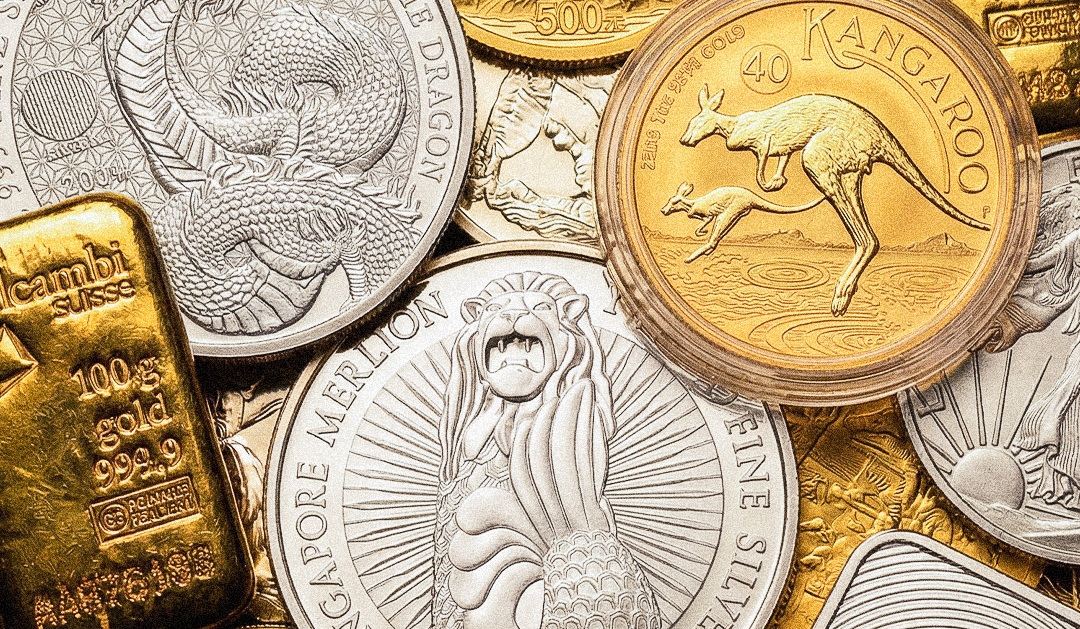
The move away from US Treasuries reflects a broader and accelerating de-dollarisation of global reserves. Central banks worldwide have been buying gold at a pace not seen since the 1960s, with purchases hitting multi-decade highs in 2023 and 2024. China has reported its 18th consecutive month of gold reserve purchases, with stated reserves now totalling 74.64 million troy ounces (over 2,300 tonnes).
China is far from alone. Poland, Uzbekistan and Kazakhstan have all been buyers in recent months, as emerging market economies in particular seek to reduce their dependence on a dollar-denominated financial system that they increasingly view as both volatile and politically weaponised, a concern that grew sharply following the freezing of Russian foreign reserves in 2022.
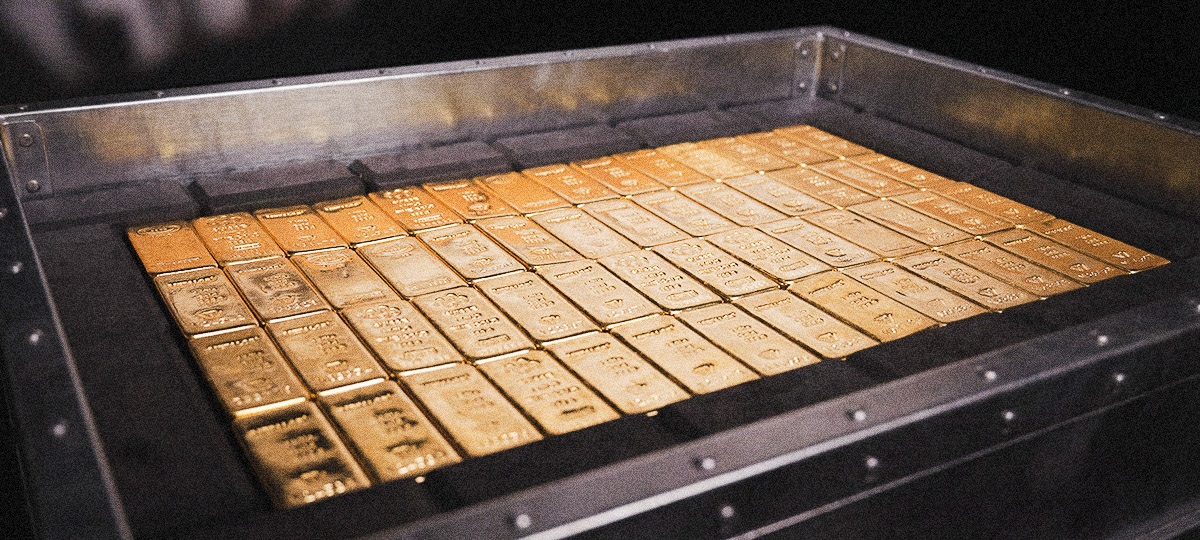
For central banks, gold offers something no sovereign bond can: it carries no counterparty risk, cannot be frozen or sanctioned, and holds its value independently of any government’s fiscal decisions. That institutional vote of confidence in gold, from the very organisations that manage the world’s money, is perhaps the most telling signal of all about where we are in the current financial cycle.
Conclusion
Global debt has moved beyond a warning sign, it has become a countdown. The mechanisms that have kept the system functioning – low interest rates, dollar dominance, and the willingness of investors to keep buying sovereign bonds – are visibly under strain. When the pressure finds its release, the assets most likely to hold their value are those that sit outside the system entirely. For investors looking to reduce their exposure to that risk, physical precious metals remain one of the most time-tested options available.
Popular Blog Posts by BullionStar
 How Much Gold is in the FIFA World Cup Trophy?
 Essentials of China's Gold Market
 Singapore Rated the World’s Safest & Most Secure Nation
 Infographic: Gold Exchange-Traded Fund (ETF) Mechanics
 BullionStar Financials FY 2020 – Year in Review
 Why Gold & Silver Jumped Overnight
 The Gold Paradox: One Price, Two Markets
 Deep Dive: China’s Exit from Retail Paper Gold Trading — Why Beijing Is Curtailing Leverage, Not Gold Ownership
 Doug Casey on Gold Becoming Money Again, Political Risk, and Why He’s More Bullish on Silver
 China Pulls the Plug on Leveraged Gold Trading