 Contact
 Help
Help





Doug Casey on Gold Becoming Money Again, Political Risk, and Why He’s More Bullish on Silver

 BullionStar
 0 Comments



Doug Casey, the best-selling author of Crisis Investing and host of Doug Casey’s Take, sat down with BullionStar’s Claudia Merkert to mark BullionStar’s 14th anniversary and reflect on how the gold and silver markets have changed over the past decade. Casey discusses why gold at $4,000 is fairly priced, why he believes political diversification now matters as much as financial diversification, and why, for the first time in years, he’s more bullish on silver than gold.
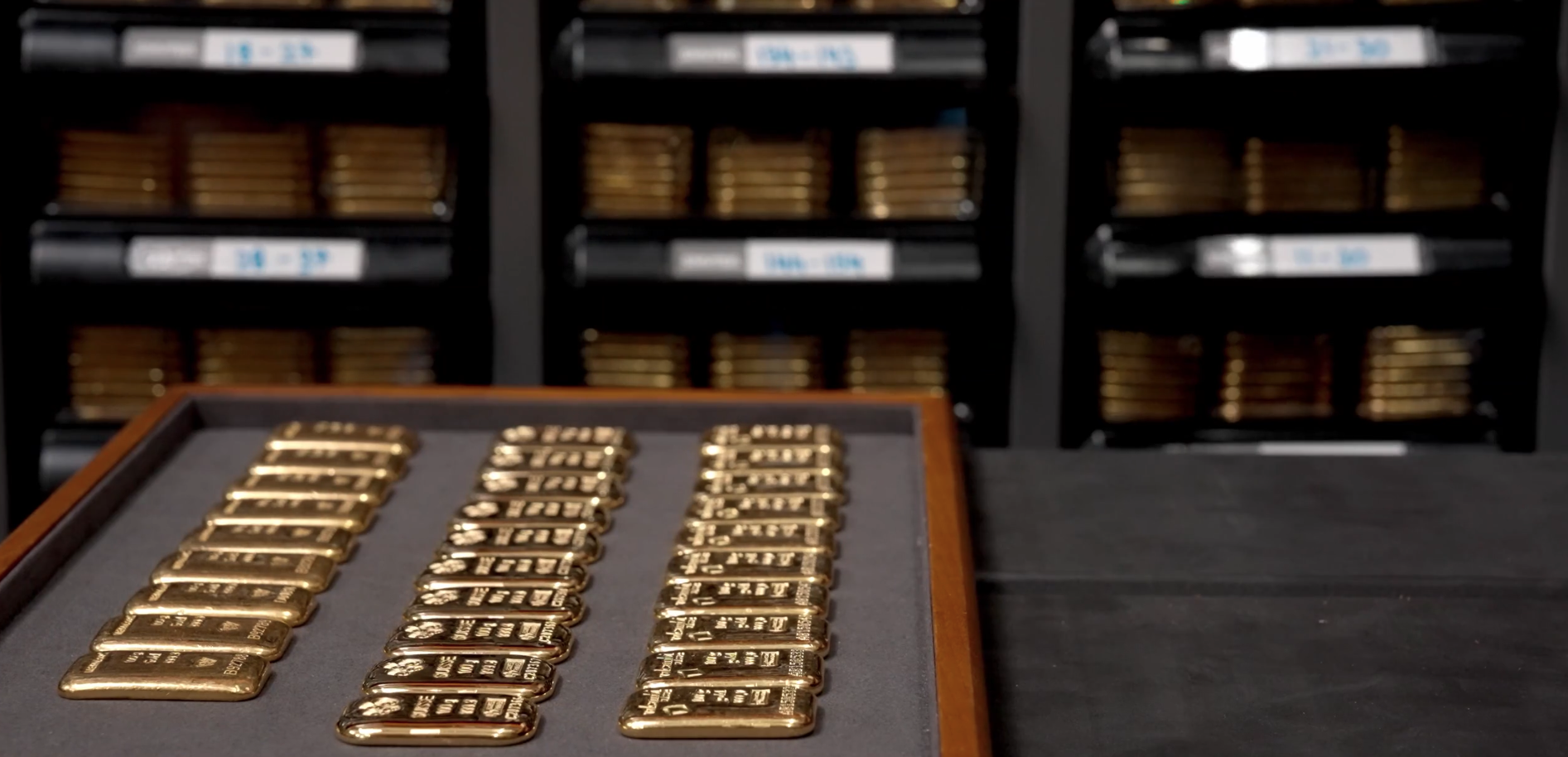
Gold at $4,000: Fairly Priced, Not Overpriced
This week marks BullionStar’s 14th anniversary. When the company opened its doors, gold was trading well below $2,000 an ounce; today it sits around $4,100. For Casey, that milestone doesn’t prompt much reflection on price.
“I have been buying gold since the low 40s in 1971. And I’ve just bought it as an asset. Sometimes there’s a great speculation, but always as an asset."
At today’s levels, Casey doesn’t see gold as cheap or expensive so much as fairly priced against everything else in the economy.
“At around $4,000, $4,100, whatever it is, I think it’s just reasonably priced relative to everything else out there in the world…"
Diversifying by Country, Not Just by Asset Class
With wars, elections, and trade disputes increasingly driving markets alongside economic fundamentals, Casey argues that financial diversification alone is no longer enough.
“It’s very important, as unstable as the world’s financial and economic situation is, to be solid and diversified financially and economically, but it’s even more important, I’m sorry to say, to be diversified politically."
He points to a string of historical examples where political upheaval, not economic mismanagement, wiped out savings overnight — Russia in 1917, Germany in 1933, Vietnam in 1975, China in 1948, and Cuba in 1959.
“Politics, unfortunately, runs the world, and therefore you have to be diversified politically. You shouldn’t have all your assets in one country, and you should have a crib outside of your home country."
Casey acknowledges this isn’t practical for everyone, but sees it as something to work toward.
Gold’s Path Back to Being Money
For Casey, gold’s appeal comes down to one structural feature no other financial asset shares.
“Gold is the only financial asset that’s not simultaneously somebody else’s liability. That’s really critical. There’s no counterparty risk to gold. You don’t have to trust anybody for gold."
He sees Bitcoin as an emerging competitor on similar grounds, sharing — to varying degrees — the characteristics Aristotle set out over two thousand years ago as the hallmarks of good money, with silver also qualifying as usable monetary metal, if a step below gold. Despite the competition, Casey isn’t planning on selling.
“I remain a bull on gold. I’m not planning on selling any of my gold… it’s an asset, it’s a security blanket, it’s savings, it’s money in its most basic form."
That view is backed by a striking data point: recent World Gold Council survey data shows nearly 90% of central banks expect their gold reserves to keep growing. He sees this as a rational response from central banks, particularly China’s, to holding a rival power’s currency.
“The Chinese are not stupid, and they realize that holding the fiat asset of an adversary is dangerous… central banks of the world have been buying gold… dumping a fiat currency from a bankrupt issuer and trading it for gold, which has been money throughout history."
Why Casey Sees the Next Crisis in the Bond Market
While Casey sees gold’s primary trend as still intact, he’s far more focused on a much larger market showing signs of real stress: bonds, which dwarf both the gold and stock markets in size.
“Interest rates went to basically zero, and actually, unbelievably, went to negative numbers, which I thought was metaphysically impossible… but it happened. So we’ve been in a bear market for bonds, which is the biggest market out there, for the last 4 years, and I think it’s gonna get much, much worse."
His expectation is that interest rates eventually retrace back toward levels last seen more than four decades ago.
“I think they’re going to head back to the level of the early 80s, when the U.S. government was paying 15, 16, 18% for money. It could happen again. I think it will happen again."
China’s Gold Policy, and the Rise of Corporate Gold Buyers
On July 24th, 2026, China ended leveraged gold and silver trading for retail investors through its banks — though investors can still buy fully paid physical bullion. Casey is complimentary of China’s relationship with gold at the citizen level (he notes gold shops are common across the country) and points to history: the collapse of the Chinese currency in 1948 under Chiang Kai-shek is a lesson the current government hasn’t forgotten.
For Casey, that principle extends to a broader point about why physical gold matters in an increasingly digital financial system.
“That’s the whole point of gold. It represents personal freedom, you can take it with you… that’s something that if we have CBDCs… you can forget about freedom, because if they don’t like you, they can simply block your account."
On the institutional side, Casey points to Tether — now one of the world’s largest private holders of gold at roughly 154 tonnes, having bought 73 tonnes over the past two years, more than China added over the same period — as a sign of where demand is heading next. But he thinks the more significant shift is still to come, from an unexpected source: the miners themselves.
“I think in the future, it will not be Tether, but will be gold mining companies… one of the dumbest things going on is that mining companies… take the gold and sell it for dollars… I think that’s probably gonna change in the future… gold mining companies are actually about the cheapest level in history… I am very, very bullish on mining companies at this point."
Why Jurisdiction Now Matters as Much as Asset Allocation
BullionStar has noticed a shift in the conversations it has with investors: the question isn’t just whether to own gold anymore, but where to hold it — with Singapore increasingly cited for its political stability, rule of law, and respect for private property. Casey agrees jurisdiction now carries as much weight as asset allocation.
“You ought to have gold coins… a significant number in your own possession. And silver coins, too, for that matter. But, as I said before, you’ve got to diversify politically, so an American or a Canadian or a European should store some of his gold outside of his home country."
Asked to name the best places to do that, he doesn’t hesitate.
“I’d say you guys are one of the three best jurisdictions in the world to store gold. I’d say Singapore, Switzerland, which is traditional but not as good as it used to be, and the Cayman Islands would be the third."
He adds a personal reference point: having once lived in Hong Kong, he considers it no longer what it was for this purpose since the British handover — leaving Singapore, in his view, as the clear choice in Asia.

Why Casey Is More Bullish on Silver Than Gold
From January to June this year, BullionStar sold about 60% as much silver as gold by volume — a notable jump from the year before, suggesting investors may be thinking about silver differently than they used to. Casey sees the shift as structural.
“They’re both monetary metals. They always have been, and I think they always will be, but silver is increasingly an industrial metal… it’s the most reflective of light, and the most conductive of both heat and electricity of all the metals… use of silver is gonna go up, up, up. And at the same time, about 70% of all the silver in the world is a byproduct of lead, zinc, and copper mining, so you’re not gonna ramp up the mines… the supply is kind of level and fixed, but the demand is going up."
That combination puts silver ahead of gold in his own preference right now.
“I’m actually pretty bullish on silver, at this point. More than gold, truth be told. As a speculation."
For investors who prefer physical metal directly, Casey has firm preferences, favouring coins over bars for individuals on the basis of purity, recognisability, and liquidity.
“My first choice for buying silver coins is probably Canadian Maple Leafs, which are the most widely traded pure gold and silver coins… I don’t think you can go wrong buying U.S. Double Eagles either… and British Sovereigns would be a third coin that’s very fungible, very liquid, very recognizable."
He also owns Australian Kangaroos and Chinese Pandas, though notes they’re less widely circulated than the Maple Leaf.
A $100 Trillion Reminder of What Currency Collapse Looks Like
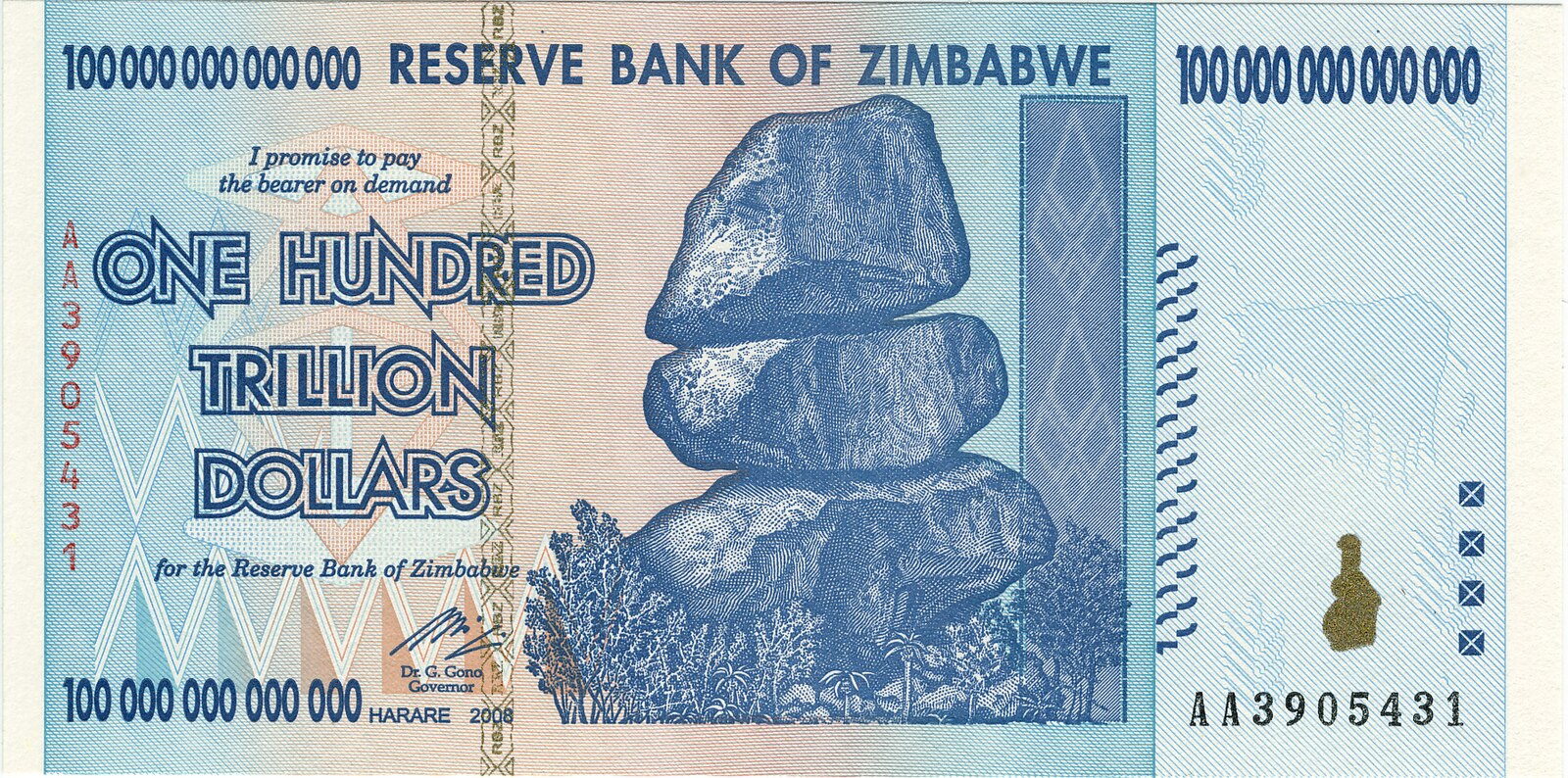
Claudia produced a physical prop for this part of the conversation — a $100 trillion Zimbabwean banknote, the kind Casey says he still carries in his own wallet as a reminder of what happens when confidence in a currency collapses. He recognised the signature on it immediately: Gideon Gono, the central bank governor who presided over Zimbabwe’s hyperinflation.
“He must be a blithering idiot. Fact is, he’s a very smart guy, and he gave me a paper that he wrote, addressed to Robert Mugabe… saying Zimbabwe should have a gold dollar."
The irony, as Casey tells it, is that the man who printed the note had privately argued for a gold-backed currency instead.
The Takeaway From Casey’s Fifty Years in Gold
Doug Casey’s insights offer a rare combination of over five decades of hands-on experience and a willingness to say what he actually thinks. From reframing gold’s fair value against a backdrop of $40 trillion in US debt, to explaining why central banks rather than retail investors have driven the bulk of recent buying, to making the case that silver’s industrial and monetary demand are now pulling in the same direction, the picture he paints is one of currencies under strain and hard assets quietly reasserting their role.
For investors, his core message is consistent: hold real assets, diversify not just across asset classes but across jurisdictions, and don’t mistake short-term price action for a change in the underlying trend.
To watch the full interview with Doug Casey and BullionStar’s Claudia Merkert, including his views on the US budget and why he’s holding more cash despite his concerns about the dollar, [click here to watch on YouTube].
Popular Blog Posts by BullionStar
 How Much Gold is in the FIFA World Cup Trophy?
 Essentials of China's Gold Market
 Singapore Rated the World’s Safest & Most Secure Nation
 Infographic: Gold Exchange-Traded Fund (ETF) Mechanics
 BullionStar Financials FY 2020 – Year in Review
 Michael Oliver – Bond Crisis, Gold’s Bull Trend and Silver’s Breakout
 Lehman Brothers Eighteen Years On
 Jim Rogers on Why He’ll Never Sell His Gold and Silver, the Fate of the Dollar, and the Complacency That Worries Him
 Why Gold & Silver Jumped Overnight
 The Gold Paradox: One Price, Two Markets