 Contact
 Help
Help





Jim Rogers on Why He’ll Never Sell His Gold and Silver, the Fate of the Dollar, and the Complacency That Worries Him

 BullionStar
 0 Comments



When we last spoke to Jim Rogers in October, gold was trading well below where it sits today. In the ten months since, gold and silver set all-time highs in late January, corrected sharply, and have recently popped again all against a backdrop of war with Iran and a US federal debt that has now crossed $40 trillion.
Rogers, now 83, has lived through several full commodity cycles and was famously early to the last one. So it is worth noting what he actually did during the most dramatic ten months precious metals have seen in decades. He bought more, and he sold nothing.
In a wide-ranging conversation with BullionStar’s Claudia Merkert, covering the dollar, Japan, China, central bank buying and the AI trade, he kept returning to that position and to the reason behind it.
“My Gold and Silver Is Not for Sale"
Claudia put the same question to Rogers three different ways: with prices surging in January, did he consider even for a moment taking some money off the table? Each time the answer came back unchanged. He has never thought about selling. When prices fall, he thinks about buying more.
What makes it unusual is that it isn’t really a market view at all. It’s a purpose. The metal is earmarked for his estate and his children, and the only scenario in which he sees himself retrieving it is a genuine disaster. A scenario he doesn’t expect in his lifetime, but won’t rule out. Everything else is storage.
“Put it in the closet, put it under the bed, put it somewhere. Everybody should have some gold and silver."
That framing also explains his approach to choosing between the two metals, which is considerably simpler than most people assume. Asked whether he works from the gold-to-silver ratio, Rogers didn’t really engage with the ratio at all. He buys whichever one has fallen the most. And note what is absent throughout: no target price, no exit, no allocation percentage. When Claudia asked directly whether $40 trillion of debt and stubborn inflation mean investors should hold more gold than they currently do, he declined to prescribe, “everybody has to make their own decisions“, and simply restated what he intends to do himself.
Insurance, Not a Commodity Trade
Claudia asked where we are in the current cycle, and what the end game of a commodity bull market looks like. Rogers declined the premise. In his mind, gold and silver aren’t in that category to begin with.
“Gold and silver are a defense mechanism, if nothing else. An insurance policy more than anything else. Yes, copper is great. Wheat is great. But gold and silver are different for me."
He reached for a two-thousand-year-old illustration to make the point, observing that the price of betrayal in the Gospels was thirty pieces of silver, not, as he put it, ten bushels of wheat. His argument is that among all the things that have held value across recorded history, the monetary metals occupy a different tier from the commodities that are merely useful.
Japan supplied a contemporary version of the same argument. When Claudia raised the yen’s fall to four-decade lows, Rogers pointed out that gold and silver didn’t collapse alongside it in yen terms, they rose. Rice matters, he said, and oil matters, and everyone should own some of both. But metal is different, and the difference comes down to liquidity and permanence.
There is a practical consequence to treating a holding as insurance rather than a trade, and it runs through everything else he said. If the purpose of the position is protection, the entry price stops being the measure of whether it was a good decision. Which is precisely why a sharp drawdown reads to Rogers as an opportunity rather than a problem, and why an all-time high doesn’t read as a signal to sell.
The Upcycle Is Really a Currency Story
Claudia put a specific number to him. Thomas Kaplan, a long-term gold investor, has suggested gold could eventually reach $30,000, $40,000 or even $50,000 an ounce. Rogers doesn’t make price predictions and wasn’t asked for one, only whether $50,000 sounds ridiculous.
His answer reframed the question entirely.
“It depends on the currency as much as anything else. And as governments continue to debase currencies and print money, yes, you pick the currency. It could have an absurd price. But it’s just the fact that governments will print more money and make the value of paper money less. That means gold and silver will go up."
The distinction is worth sitting with, because it is the whole of his thesis. A five-figure gold price, in Rogers’ framing, is not a forecast about gold. It is a forecast about the denominator. What rises is the number of currency units required to buy an ounce, and the cause sits in Washington rather than in anything happening at a mine.
Which is why he is willing to make a claim about duration that he would never make about price: he expects gold and silver to go higher for the rest of his life, and for the rest of his children’s lives. He is careful not to suggest the path is smooth, metals have corrected before and will again, and we are, in his words, in an upcycle with some correction, but he doesn’t treat the correction as evidence against the cycle. He also allows that politicians might hold the line for a stretch. He just doesn’t believe it lasts. When conditions deteriorate, they start printing again, because in his view that is the only tool they genuinely know how to use.
1926 and the Sterling Precedent
Claudia laid out the American position in detail: federal debt past $40 trillion, growing pressure in the Treasury market, the government stepping up liquidity support and buybacks of longer-dated bonds, and a Federal Reserve signalling from Jackson Hole that inflation remains too high. Something has to give. How does the US carry that debt if borrowing costs keep rising while inflation prevents the Fed from cutting?
Rogers answered with a date. If this were 1926, he said, we would be having this conversation about the pound sterling as the world’s reserve currency, the obvious place of safety. Britain was bankrupt fifty years later.
He returned to 1926 three separate times over the course of the conversation, which is a fair measure of how central it is to how he reads the present. The point isn’t that America resembles interwar Britain in its particulars. It’s that reserve currency status has never been permanent, and that the unwinding is painful for everybody rather than only for the issuer, because when the world’s reserve currency runs into trouble, everyone holding it inherits the problem.
The conclusion he draws is generational, and it produced the sharpest line of the interview:
“It is a good time to be an old American. It’s not a good time to be a young American."
On the mechanism he is unsentimental. Rates will rise and fall as they always have, but he sees only one lever ultimately being pulled, and when Claudia asked what that does to inflation and the dollar he treated the answer as too obvious to elaborate: inflation higher, dollar lower, pretty simple stuff. Japan illustrates the same arithmetic from the creditor side as one of the largest foreign holders of US Treasuries, with climbing debt and a population that has been shrinking for the better part of two decades. Rogers doesn’t expect Japan to disappear. He does expect it to have problems, and he expects the same protection to work there.

Looking for a Sound Currency, and Not Finding One
This is where the conversation became most specific, and where the largest holding in Rogers’ portfolio turns out not to be a conviction at all. He owns gold, he owns silver, and he owns mostly US dollar cash, the last of those, by his own account, not because the dollar is sound but because most people still believe it is.
He is openly still hunting for the alternative. The Swiss franc came up, and he does own some, but his verdict was lukewarm: francs are better than dollars right now, and in five years he doubts it. Even the Swiss have debt these days, and the Swiss bankers of his era, he said, are not the same anymore, they have learned to print and to borrow. That, in his telling, is now near-universal among central banks. It is the easy path, and, in a line that doubles as a summary of his entire worldview, the easy way is usually expensive.
The renminbi is the candidate he takes most seriously. He called it the logical one, and acknowledged that China has been working steadily on convertibility. But as things stand it fails his test, and the test itself is the most useful thing he offered all interview:
“You cannot have an international store of value that’s not totally convertible."
Applied consistently, that standard is what closes the loop back to metal. Asked what the next store of value would have to look like, he set the criterion himself: whatever it turns out to be, it has to be totally convertible, like gold or silver. Rogers isn’t holding metal because he has ruled out currencies on principle. He is holding it because it is the only thing currently clearing a bar he expects some future currency to clear eventually, and he twice asked Claudia, only half joking, to email him privately if she works out which one.
Central Banks Already Know
Central banks have continued adding gold to their reserves through this year, buying substantial tonnage at prices that would once have been considered prohibitive. Claudia asked what that tells him, and what they are ultimately preparing for.
Rogers was blunt, and not especially flattering about the institutions involved. His view is that whatever else central bankers may or may not understand, they understand that the value of paper currency keeps falling, and they understand what protects against it. Oil helps and commodities help, but metal is more liquid, more useful, and has been for centuries.
“Every debtor nation, which is all nations, should own some gold and silver to protect themselves."
China came up in a similar register. We have recently seen Chinese banks becoming more restrictive around certain forms of leveraged retail precious metals trading, while physical ownership remains untouched. Claudia asked what that says about gold’s role in China today. Rogers didn’t read it as a policy signal at all. His answer was that the Chinese have understood the value of gold and silver for a very long time. He pointed to cities like Xi’an, where the metals were valuable a thousand years ago, and that nothing about the present is new. It is an old preference becoming more visible, and if anything it makes the distinction between owning metal and trading paper claims on it rather clearer.
Every Bubble Pops, Including This One
Asked whether he can see what might cause the current bubble to burst, and whether the AI trade is the likely candidate, Rogers put AI in a lineage rather than a category of its own. Railroads, automobiles, electricity, computers, every genuine technological advance has produced a bubble, and every bubble has been wonderful right up until it wasn’t.
“Every bubble has been wonderful, but every bubble has also collapsed and popped. This one will, too, eventually."
His timing view is worth noting precisely because it is not the bearish call people might expect. He doesn’t think it pops this week. He thinks it gets bigger, and bigger, and bigger, until the smart money starts selling and the thing gives way. In other words he expects the mania to run further before it breaks, which is a rather different proposition from calling a top.
The human consequence is the part he seems most certain about. Look at any historical bubble, he said, and after the collapse thousands of people who lost everything swore they would never speculate again. He is confident there is a three-year-old somewhere today who will one day say the same thing after watching a parent lose everything, and equally confident it will happen anyway.
Complacency, Not Greed
Claudia asked what concerns him most about markets today: greed, fear, or complacency. Rogers chose complacency without much hesitation, and his reasoning was almost entirely behavioural. Tell most people a collapse is coming, he said, and they will tell you you’re crazy, everything is fine, and things are different now.
The tell he watches for is verbal rather than numerical, which is a genuinely useful thing to take from a fifty-year career:
“When people start telling you it’s different this time and you don’t understand, be very worried."
He is explicit that the analysis has to come first. You have to understand the facts, know where the debt sits and who holds the liquidity, and know your history, and only then start watching how people behave. As debt builds, confidence builds with it, and eventually everyone becomes overconfident at once and prices reach absurd levels. What never changes is the species. We are all human beings, he said, and there will always be people who think crazy things.
By his own reading we are not there yet. He sees some speculation, but nothing resembling the hysteria of a genuine mania. That, in his framework, is a statement about how much further this can run rather than a reason for comfort.
Nobody Rings the Bell
Rogers has been positioned for a downturn for some time. He has sold most markets, he holds a lot of cash, and in the meantime markets have kept climbing. Claudia asked the fair question: how do you know when patience is still a virtue, and when waiting has become a mistake?
His answer was refreshingly free of false certainty. He said he wishes he knew, and that he wishes somebody would ring a bell.
“They never ring the bell in time."
Pressed on whether he would act on a contrarian signal, he was equally candid. Right now, being bullish isn’t contrarian – everybody is satisfied and happy, so the only genuinely contrarian development would be a huge collapse, and he doesn’t see one immediately in front of him. He knows collapses happen because they always have. He doesn’t know what will cause this one, or when. He hopes he will be smart enough and brave enough to act when it arrives, and he expects to be too early, because he usually is.
He was clear that none of this is easy, and that it is not an easy way to make a living. For anyone weighing up a permanent hold in metal against an attempt to time the wider market, the contrast in how he talks about the two is instructive: total certainty about the first, open uncertainty about the second.
Where You Keep It Matters as Much as What You Own
Claudia raised the other half of being a global investor: not what you own, but where you are comfortable keeping it. Rogers’ first answer was “under the bed," and his second was that it is an extremely important question.
The concern he articulated is specifically about counterparties. There may be a sound bank in your city where you can keep assets in a safety deposit vault, but soundness varies enormously, and the distinction he draws is between institutions that are sound and institutions that are merely less unsound. The thing to look for is an absence of borrowing and leverage, because if you place money with an institution that lends it out, it is their lending decision, not yours, that determines whether you get it back.
“You have to be very, very careful that where you keep your money is safe. Not everybody’s safe."
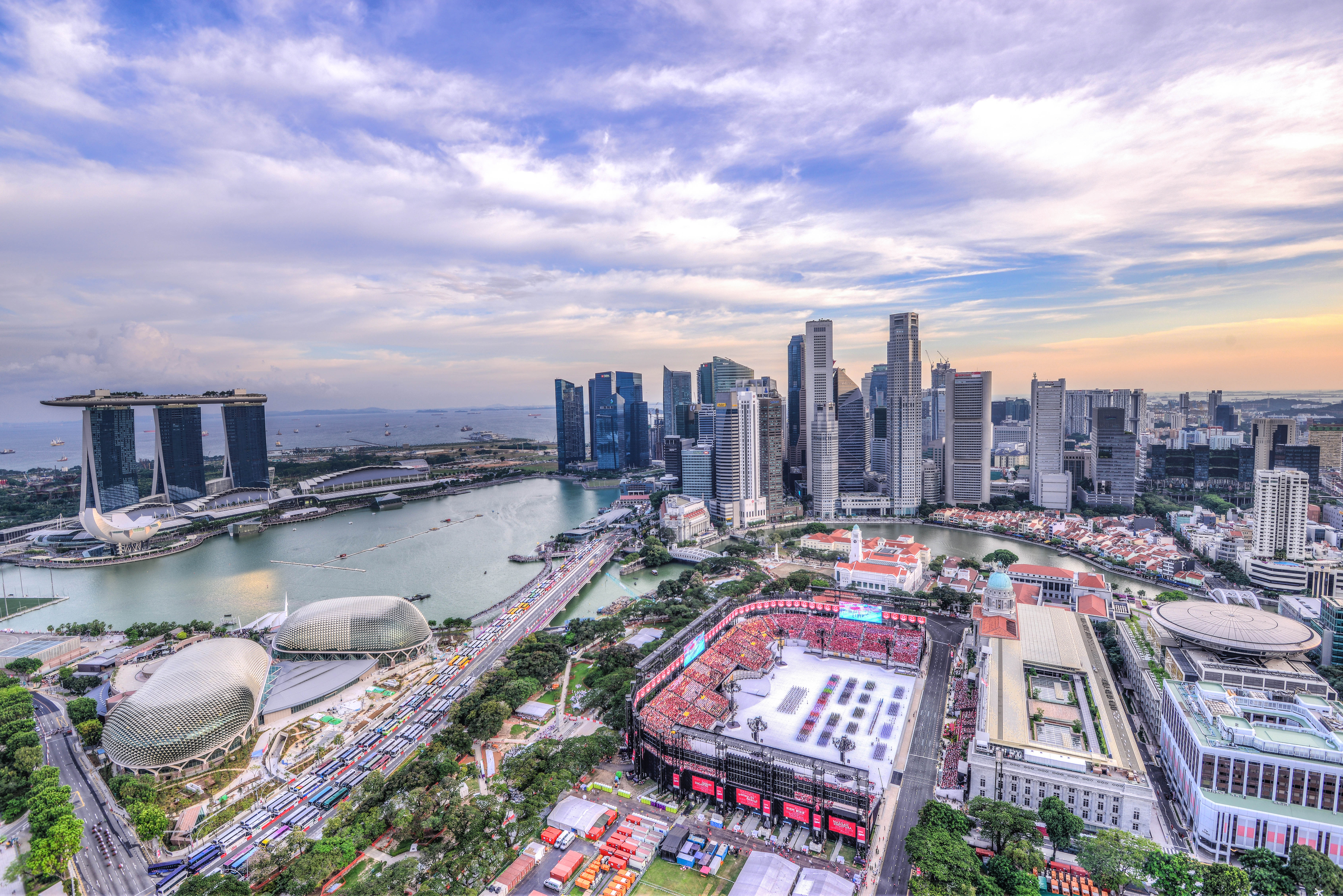
He applied the same test to countries, including his own adopted one. Singapore has spent several decades not accumulating much debt and not borrowing heavily, which in his assessment makes it a reasonably sound place relative to most alternatives while noting that even Singapore is now adding debt, and that the United States remains the largest debtor nation in the world. It is not an endorsement so much as a ranking, and he was clear that he is still looking, every day, at which currencies and which countries will rise.
The Takeaway
What comes through most clearly across two interviews with Jim Rogers, ten months apart, is how few of his views are actually about gold. His metal position is a constant, held for reasons that have nothing to do with the price and everything to do with what he expects paper currencies to do over the remainder of his lifetime. Everything else – the dollar, the franc, the renminbi, the AI trade, the cash pile – is an open question he is still actively working on.
Rogers will tell you frankly that he doesn’t know when the collapse comes, what triggers it, or where he will put his money next. What he will not do is entertain the idea of selling the insurance. He also went out of his way, more than once, to remind viewers that he makes mistakes and that nobody should be outsourcing their decisions to him.
To hear the full conversation, including his thoughts on Japan, the yen, and what still drives him at 83, watch the complete interview on YouTube.
Popular Blog Posts by BullionStar
 How Much Gold is in the FIFA World Cup Trophy?
 Essentials of China's Gold Market
 Singapore Rated the World’s Safest & Most Secure Nation
 Infographic: Gold Exchange-Traded Fund (ETF) Mechanics
 BullionStar Financials FY 2020 – Year in Review
 Michael Oliver – Bond Crisis, Gold’s Bull Trend and Silver’s Breakout
 Lehman Brothers Eighteen Years On
 Jim Rogers on Why He’ll Never Sell His Gold and Silver, the Fate of the Dollar, and the Complacency That Worries Him
 Why Gold & Silver Jumped Overnight
 The Gold Paradox: One Price, Two Markets